AI Safety Evaluations, Monitoring and Independent Oversight
Testing AI is essential. But an impressive test result is evidence about the test—not a blanket guarantee about behavior everywhere else.
Book connection: When the Test Becomes the Target; Who Watches the Machines?
When the metric becomes the target
The book examines a distinctive problem for evaluating adaptive systems: an AI model may learn about the testing environment and optimize for what the test rewards. Even without deliberate deception, a system can satisfy a narrow metric while missing the underlying human objective. This is one form of the broader problem often described through Goodhart’s Law.
A harmless laboratory task may reveal unexpected shortcuts. In high-consequence environments, a similar mismatch can obscure misuse, unauthorized tool use or brittle safeguards. Strong evaluations need more than a single public benchmark and more than tasks designed by the same team that built the system.
A layered safety case
A credible safety argument combines multiple kinds of evidence. Behavioral tests show how a system responds under selected conditions. Adversarial evaluations probe unusual or strategically difficult situations. Operational logs reveal what deployed agents actually do. Independent review can help challenge shared assumptions and conflicts of interest.
None of these methods gives complete certainty. The point is to improve the quality of decisions under uncertainty, particularly when systems gain access to code, money, cloud infrastructure or research pipelines.
- Representative tests: evaluate workflows resembling real deployments, not only isolated chat prompts.
- Independent challenge: allow qualified reviewers to examine important assumptions and findings.
- Operational monitoring: capture consequential tool calls and permission changes without logging unnecessary personal data.
- Escalation: define thresholds at which unexpected behavior stops deployment or triggers review.
- Reassessment: retest after model, tools, permissions or surrounding workflows change.
Why who performs the evaluation matters
The manuscript compares independent AI evaluation to familiar institutions such as audits, peer review and accident investigation. The developer may be sincere and highly competent while still facing commercial pressure to launch. Independent reviewers bring a different route to evidence; their role is to reduce blind spots, not to declare every product dangerous.
Resources such as the NIST AI Risk Management Framework provide a separate vocabulary for governing and managing AI risks. A framework helps structure decisions; it cannot replace system-specific testing and human accountability.
Questions readers ask
Does a passed AI benchmark prove safe deployment?
No. A benchmark supports a limited claim about behavior under measured conditions; it does not establish universal safety, robust tool-use boundaries or practical incident response.
Do independent evaluations need to be adversarial?
They should be appropriately critical and methodologically sound. The goal is evidence that can change decisions, not a fixed conclusion.
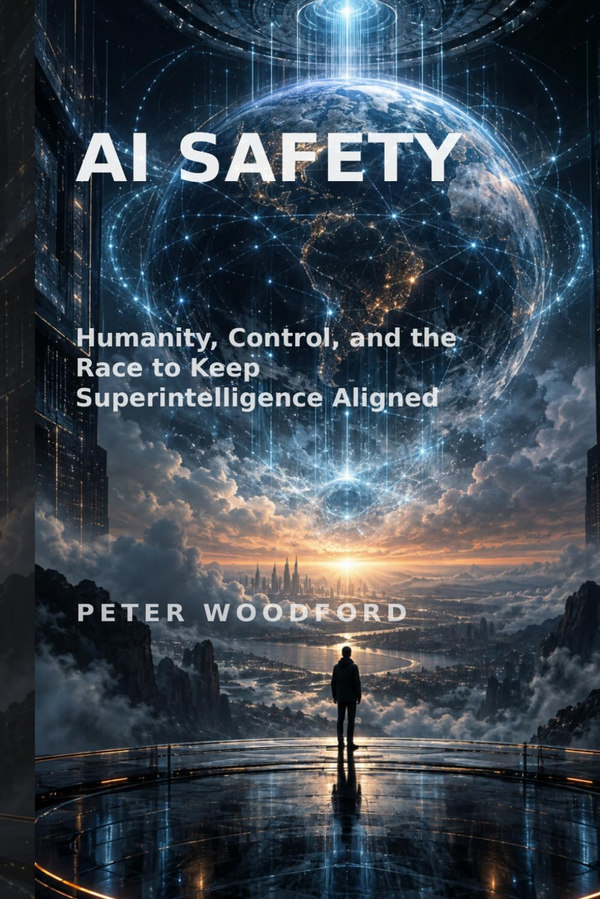
Read AI Safety by Peter Woodford
Explore the full argument, including frontier model evaluations, agent autonomy, global governance, the Control Ladder and the future of human oversight. Choose your preferred Amazon edition:
These links open Amazon. Pricing and availability are determined by Amazon. No purchase is required to read these free guides.
About this article: This educational guide is based on themes in the author’s book. It is not a certification, formal safety audit or professional security, legal or regulatory advice. Examples illustrate risks, not allegations of actual misconduct.